
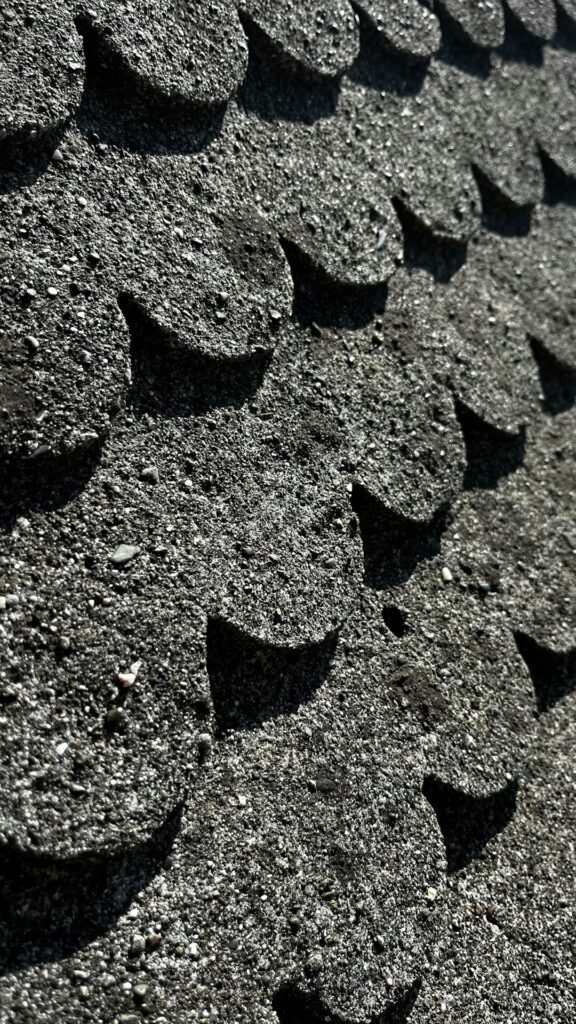
Shingle curling and cracking are common signs that an asphalt roof is aging, stressed by weather, or affected by installation and ventilation problems. Some damage can be monitored or repaired, but widespread curling, brittle shingles, or moisture entering the roof system usually require more extensive attention.
What do curling and cracking look like?
Curling occurs when the edges or corners of asphalt shingles lift away from the roof surface. The lower edges may curl upward, while the corners may turn inward or outward. Shingles can also appear wavy or uneven when viewed from the ground.
Cracking appears as splits in the shingle surface. These may run vertically, horizontally, or in irregular patterns. Fine cracks can be difficult to see, while larger splits may expose the darker asphalt layer or the fiberglass mat beneath.
Other warning signs include:
- Shingle granules collecting in gutters or at the base of downspouts
- Missing pieces or exposed nail heads
- Dark lines, blisters, or bald areas on the shingles
- Shingles that look brittle, faded, or unusually rough
- Water stains on ceilings, walls, or attic framing
A roof does not need to leak visibly before its shingles become a concern. Curling and cracking can reduce the roof’s ability to shed water, especially during wind-driven rain or melting snow.
Why do roof shingles curl?
Curling usually results from age, heat exposure, moisture movement, poor ventilation, or improper installation. More than one cause may be present at the same time.
Older shingles gradually lose flexibility. As the asphalt dries and the reinforcing material becomes less resilient, the edges may lift. Roofs with heavy sun exposure can age unevenly, particularly on south- and west-facing slopes.
Insufficient attic ventilation can also contribute. During warm weather, heat and moisture can build up beneath the roof deck. Repeated expansion and contraction place stress on the shingles and may shorten their useful life. In colder months, inadequate ventilation can contribute to condensation and uneven roof temperatures.
Installation problems are another possibility. Shingles that were not fastened correctly, installed over an uneven surface, or applied in unsuitable weather may fail to seal properly. If the adhesive strips do not bond, wind can gradually lift the shingle edges.
In Seneca Falls, repeated freezing and thawing can add stress to roofing materials. Ice, snow, and changing temperatures can make existing curling more noticeable, particularly on roofs that already have age-related wear.
What causes shingles to crack?
Cracking develops when shingles lose flexibility or move differently from the roof surface beneath them. Temperature changes are a major factor. Asphalt shingles expand during warm conditions and contract during cold weather. Over many seasons, this movement can create surface splits.
Cracking may also result from:
- Advanced age and drying asphalt
- Manufacturing defects or inconsistent material quality
- Improper handling during installation
- Movement in the roof deck
- Excessive attic heat
- Severe weather or falling branches
- Foot traffic on brittle shingles
Small surface cracks do not always mean that water is entering the home immediately. However, cracks can widen as the material continues to age. A split that reaches through the shingle may allow water to reach the underlayment or roof deck.
Can curled or cracked shingles be repaired?
A limited number of damaged shingles may be repairable, especially when the surrounding roof is in good condition. A repair may involve replacing individual shingles, resealing lifted edges, or correcting a specific source of damage.
Repairs are less dependable when shingles are brittle, cracked across large areas, or no longer match the flexibility of replacement materials. New shingles installed among severely aged shingles may not blend well or perform consistently.
A roof assessment should consider the pattern of damage, not just the worst-looking shingle. A few isolated problems near a tree branch may be different from widespread curling across several roof slopes.
Repair is more likely to be reasonable when:
- Damage is limited to a small area
- The shingles remain flexible
- The underlayment and roof deck are dry and sound
- There are no repeated leaks
- The roof is relatively early in its expected service life

More extensive replacement may be needed when curling or cracking is widespread, leaks are recurring, or the roofing material has become brittle throughout.
Is it safe to inspect the roof from the ground?
Ground-level inspection is usually the safest first step. Binoculars can help reveal lifted corners, missing granules, exposed fasteners, or uneven rows without requiring anyone to climb onto the roof.
Avoid walking on shingles that appear curled, cracked, wet, icy, or fragile. Steep slopes, frost, snow, and moss can create serious fall hazards. Ladders should not be placed on unstable surfaces, near overhead electrical lines, or where snow and ice can shift.
From the ground, look at roof edges, valleys, areas around chimneys or vents, and slopes that receive strong sunlight. These locations often reveal early deterioration. Inside the home, check attic spaces for damp insulation, staining, daylight through the roof deck, or a musty smell.
What should be done after spotting damage?
Begin by documenting the location and extent of the problem. Take photographs from the ground, note the date, and record whether the damage appeared after high winds, heavy snow, or a major temperature change.
If there is an active leak, place a container beneath the drip and move furniture or stored items away from the area. Do not rely on interior staining alone to locate the entry point; water can travel along rafters or roof decking before appearing inside.
Temporary protection may be appropriate during bad weather, but adhesives, roofing cement, and improvised coverings can conceal the problem or trap moisture if used incorrectly. Permanent repairs should address the damaged shingle and any underlying issue rather than simply covering the visible crack.
Prompt evaluation is especially sensible when:
- Water is entering the living space
- Shingles are missing or lifting in several areas
- The roof deck feels soft or appears stained
- Damage is near flashing, valleys, or roof penetrations
- Large sections look brittle or cracked
- Snow or ice has recently pulled, broken, or displaced shingles
How can future curling and cracking be reduced?
Regular observation helps identify deterioration before a small defect becomes a leak. Clear leaves and other debris from gutters so water can drain away from the roof. Keep tree limbs from rubbing against shingles or dropping branches onto the roof.
Attic ventilation and insulation should work together. Ventilation alone does not correct every moisture problem, and adding vents without considering the entire airflow pattern can create uneven performance. Bathroom and kitchen exhaust should discharge outdoors rather than into the attic.
After major wind, hail, or heavy snow, inspect the roof from the ground and check attic areas for signs of moisture. In a climate with cold winters and frequent temperature changes, seasonal observation is more useful than waiting for a ceiling stain to appear.
Shingle curling and cracking are not merely cosmetic issues. They are clues about the condition of the roofing material, the roof deck, and the attic environment. Identifying the pattern early helps distinguish an isolated repair from a broader problem and reduces the chance that winter weather or wind-driven rain will turn deterioration into interior damage.
