
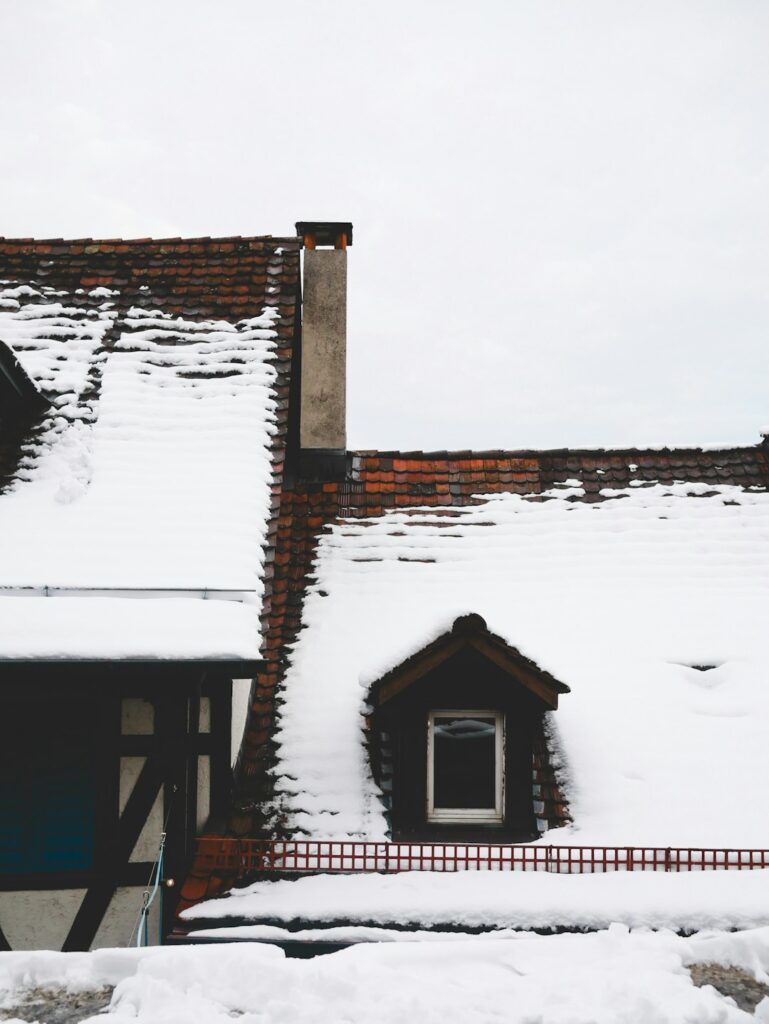
Which roof style is better for a home?
Neither flat roofs nor sloped roofs is automatically better. The right choice depends on the building’s design, snow and rain exposure, attic needs, maintenance expectations, available budget, and how the roof will be used.
For many traditional homes in Seneca Falls, sloped roofs are the more familiar option because they shed water and snow naturally. Flat roofs can still be a practical choice, especially for additions, garages, commercial-style structures, and modern homes, but they require careful drainage planning and regular observation.
The key difference is simple: a sloped roof relies mainly on gravity to move water away, while a flat roof uses a very low pitch, drains, and carefully sealed roofing layers.
What is the difference between a flat roof and a sloped roof?
A flat roof is not usually perfectly level. Most are built with a slight pitch so rain and melting snow can flow toward drains, scuppers, or roof edges. Common flat-roof systems include single-ply membranes, modified bitumen, and built-up roofing.
A sloped roof has a more noticeable angle and may use asphalt shingles, metal panels, slate, or other materials. Its shape creates an attic or roof cavity in many homes, although some sloped roofs are built without an accessible attic.
The roof’s angle affects nearly every other decision, including material selection, ventilation, insulation, snow behavior, repair access, and how water is managed around the building.
Why are sloped roofs common in this area?
Sloped roofs generally handle rain and snow more naturally because water moves downhill without depending entirely on internal drains. That can be helpful during winter weather, especially when ice, leaves, or debris temporarily block a drainage point.
A sloped roof may also be a good fit for older housing styles, where the roof shape is part of the building’s architectural character. Traditional two-story homes, farmhouses, cottages, and many detached garages often look and function best with a roof that matches the original structure.
Other advantages include:
- More space for attic insulation and ventilation
- Fewer areas where standing water can remain
- Easier visual inspection from the ground
- A wide range of repair and replacement materials
- The possibility of using attic space for storage, depending on the design
A sloped roof is not maintenance-free. Gutters, flashing, valleys, chimney areas, and roof penetrations still need attention. Snow can also slide from steep surfaces, creating a safety concern near entrances, walkways, and lower roofs.
What are the advantages of a flat roof?
Flat roofs can provide useful design and space advantages. They are common on additions, porches, garages, workshops, and buildings with a modern or low-profile appearance.
A flat roof may make it easier to place mechanical equipment, skylights, rooftop access points, or outdoor features, although any added equipment must be properly supported and sealed. The simpler shape can also make the roofline work well where a taller sloped roof would interfere with windows, property boundaries, or the proportions of the building.
Flat roofs may offer:
- A clean, low-profile appearance
- Efficient use of interior space below the roof
- Fewer complicated roof angles than some steep designs
- Convenient access for inspection and maintenance
- Potentially simpler construction on additions or outbuildings
The main limitation is drainage. Even a small amount of ponding can become a concern if water remains in place for extended periods. Membranes, seams, flashing, drains, and edge details must work together. A flat roof that looks simple from above may depend on precise installation and regular upkeep.
How does winter weather affect the choice?
Winter conditions favor good drainage, strong flashing, sound insulation, and careful snow management more than any single roof shape.
Sloped roofs usually shed snow more readily, but that does not always make them safer. Snow can slide unexpectedly, overload lower roof sections, or contribute to ice buildup near eaves. Roof valleys and areas around chimneys may collect snow and meltwater.
Flat roofs keep snow in place longer, which can increase the load on the structure. A properly designed flat roof should account for snow accumulation, drainage, emergency overflow routes, and access for safe inspection. Snow should not be removed casually because walking on a roof can damage the membrane or create a fall hazard.
Homeowners should pay particular attention after cycles of heavy snow followed by thawing and refreezing. These conditions can expose problems with drainage, flashing, gutters, and attic ventilation.
Which roof is more energy-efficient?
Roof shape alone does not determine energy performance. Insulation quality, air sealing, ventilation, window placement, and the condition of the roofing system usually matter more.
Sloped roofs often make it easier to create a ventilated attic with insulation at the attic floor. Flat roofs are commonly insulated along the roof deck, which can work well but requires careful control of moisture and thermal bridging.
A poorly insulated sloped roof can perform worse than a well-designed flat roof. Likewise, a flat roof with gaps, compressed insulation, or inadequate drainage may create moisture and heating problems.
For either design, useful questions include:
- Where is the insulation located?
- Is the roof assembly designed to dry if moisture enters?
- Are air leaks sealed around lights, vents, chimneys, and attic hatches?
- Is ventilation appropriate for the specific roof design?
- Are ice dams or interior condensation likely?

Is a flat roof cheaper than a sloped roof?
There is no universal answer. A simple flat roof may use fewer framing materials, but the total cost depends on the structure, insulation, drainage system, membrane type, edge details, access, and existing conditions.
A sloped roof may cost more to frame, especially if it includes multiple valleys, dormers, skylights, or complex transitions. However, its drainage may be more straightforward. A flat roof may appear less complicated but require specialized detailing around drains, parapets, vents, and wall connections.
Long-term cost should include inspection, cleaning, repairs, expected service life, and the consequences of delayed maintenance. The least expensive initial design is not always the least expensive over several decades.
What maintenance does each roof require?
Sloped roofs benefit from periodic checks of shingles or panels, flashing, valleys, ridge areas, gutters, and downspouts. Moss, leaves, and branches should not be allowed to hold moisture against roofing materials. Interior ceilings and attic spaces should also be checked for staining, damp insulation, or daylight where it should not appear.
Flat roofs require attention to drains, scuppers, seams, membrane edges, flashing, rooftop equipment, and areas where water remains after rain. Leaves and ice can obstruct drainage, so debris should be removed with methods that do not puncture or scrape the roof surface.
Warning signs for either style include:
- New ceiling stains or peeling paint
- Damp insulation or musty attic odors
- Cracked, displaced, blistered, or missing roofing materials
- Sagging roof areas or interior ceilings
- Water that repeatedly remains in one location
- Damaged flashing around walls, chimneys, vents, or skylights
Structural sagging, active leaks near electrical equipment, or suspected snow overload requires prompt attention because these conditions can create safety hazards.
Which roof is right for your home?
A sloped roof is often the practical choice for a traditional house, especially when attic space, natural drainage, and architectural compatibility are priorities. A flat roof may be suitable for an addition, garage, modern home, or building where a low profile and accessible roof surface are useful.
The best decision should consider the complete roof assembly rather than the appearance alone:
- Building shape and existing roof structure
- Expected snow and rainfall exposure
- Drainage routes and overflow protection
- Insulation and ventilation strategy
- Access for inspection and maintenance
- Compatibility with neighboring roof sections
- Local code requirements and structural design
In Seneca Falls, the most durable roof is usually the one that matches the building, manages water deliberately, accounts for winter loading, and receives appropriate maintenance. Roof shape matters, but sound design and reliable detailing matter more.
